Whole-House Water Filtration System Installation in Indianapolis

Cleaner Water at Every
Faucet in Your Home

A water softener handles hardness, but it doesn’t remove chlorine, sediment, or the chemicals that affect how your water tastes and smells. A whole-house filtration system treats everything that comes through your water main — so every faucet, every shower, and every appliance gets filtered water. We install carbon, sediment, and UV filtration systems for residential and commercial customers across Southside Indianapolis.
Rectangle Image
How Can We Help?
Rectangle Image
Your Contact
Rectangle Image
Your Contact
Rectangle Image
Your Contact
Rectangle Image
Your Message

Plumbing Services We Handle Every Day

Water
Heaters

Tank and tankless repair, install, and flush service. Navien and Rinnai certified.

Water
Quality

Softeners, whole-house filtration, and reverse osmosis systems for Central Indiana’s hard water.

General Plumbing Repairs

Faucets, toilets, garbage disposals, fixture stops, main shut-offs, and everyday leaks — done right the first time.

Emergency Plumbing

Leak detection, burst pipes, and same-day help when practical.

Gas
Lines

Licensed gas line repair and installation for stoves, water heaters, dryers, and more.

Remodels

Bathroom & kitchen remodeling plumbing rough-ins, fixture upgrades & light remodels.

Repiping

Whole-house repiping for older homes with pinhole leaks or low water pressure.

Sump
Pumps

Install, repair, and battery backup systems to keep basements and crawlspaces dry.

Commercial Plumbing

Licensed commercial work for small businesses and property managers across Marion and Johnson Counties.

Plumbing Inspections

Whole-house inspections and free second opinions on quoted projects.

hOW CAN WE HELP?

What's in Your Indianapolis Water Beyond Hardness

Indianapolis draws its drinking water from surface water sources — primarily the White River and Fall Creek Reservoir. Surface water systems require chlorine treatment to kill bacteria and pathogens before the water reaches your home. That treatment is necessary and effective, but it also produces disinfection byproducts, including trihalomethanes. The EPA sets the maximum allowable level for total trihalomethanes (TTHMs) at 80 parts per billion. Indianapolis water has tested at 48 ppb — within legal limits, but high enough that many homeowners prefer an additional layer of filtration.


A whole-house water filtration system addresses what your municipal treatment plant doesn’t fully remove. We install systems tailored to your home’s specific water quality — not a generic off-the-shelf filter. We test your water, identify what’s in it, and recommend the right combination of filtration to solve the actual problem.

Built on Workmanship, Not Hard Sells

Three Decades of Experience

Tank and tankless repair, install, and flush service. Navien and Rinnai certified.

Repair-First, Always

If a repair will solve the problem, we'll tell you — even when a replacement would pay us more.

Reasonable Upfront Pricing

Clear options for your budget, no pressure, and free second opinions on quoted projects.

100% Satisfaction Guarantee

Every repair and install is backed by a workmanship guarantee that matters when it counts.

Signs Your Home Could Benefit From Water Filtration

Water Tastes or Smells Like Chlorine 

If your tap water has a noticeable chlorine taste or swimming-pool smell, it means residual disinfectant from the treatment plant is making it all the way to your faucet. It’s not harmful at these levels, but it affects the taste of your drinking water, cooking, and coffee. 

Visible Particles or Cloudy Water 

If you see tiny particles, sand, or sediment when you fill a glass — or if your water looks slightly hazy — there’s physical debris making it through your supply line. This can happen with older municipal infrastructure or after utility main breaks in the area. 

Water Has a Metallic, Musty, or Earthy Taste 

Dissolved metals, organic compounds, and algae byproducts can give water an off taste that chlorine treatment doesn’t eliminate. Surface water sources like the White River are more susceptible to these seasonal variations than groundwater. 

You Want to Reduce Chemical Exposure 

Even when municipal water meets EPA standards, some homeowners prefer reducing their exposure to disinfection byproducts, trace chemicals, and other compounds that testing may detect at low levels. A filtration system gives you that extra layer of control over what comes out of your tap.

Orange, Brown, or Blue-Green Stains on Fixtures 

Staining around drains, on porcelain, or inside toilet bowls usually points to dissolved iron (orange/brown) or copper (blue-green) in your water supply. These minerals aren’t removed by a water softener alone — they require targeted filtration.

Filtration Systems We Install

Activated Carbon Filters

The most common whole-house filter. Carbon filtration removes chlorine, chloramines, volatile organic compounds (VOCs), and disinfection byproducts like trihalomethanes. It also improves taste and eliminates chemical odors. We install whole-house carbon systems that treat every drop of water entering your home.


Sediment Filters

Sediment filters trap sand, silt, rust particles, and other physical debris before it reaches your plumbing. They're often installed as a pre-filter ahead of a carbon system to extend its life and protect downstream equipment from clogging.

UV Water Treatment Systems

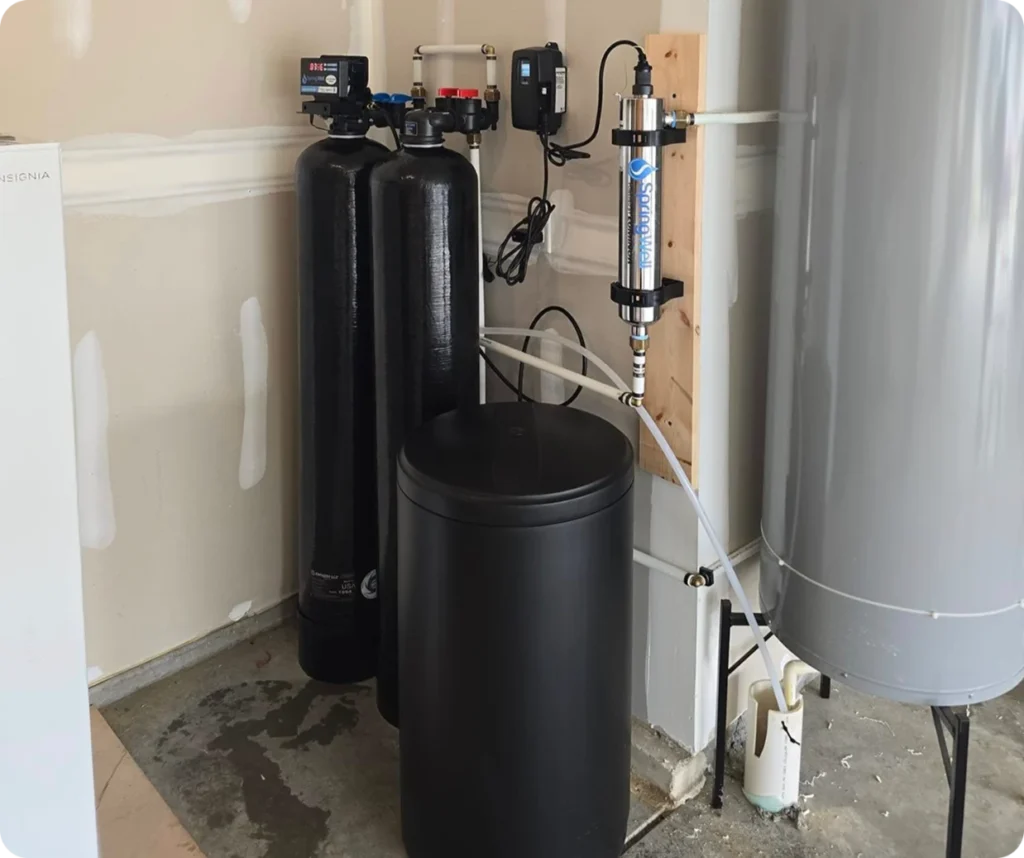
Ultraviolet treatment uses UV light to neutralize bacteria, viruses, and other microorganisms without adding chemicals to your water. It's an effective option for homes that want biological protection beyond what chlorine provides — especially useful for well water or compromised municipal lines.

Whole-House Chemical and Contaminant Reduction Filters

For homes that need broader contaminant reduction, we install multi-stage systems that combine carbon, sediment, and specialty media to address specific concerns identified during water testing. These systems are customized based on what's actually in your water.

What Whole-House Filtration Does for Your Home

Water That Tastes and Smells Better

Removing chlorine and dissolved organics makes a noticeable difference in how your water tastes. Drinking water, ice, coffee, and anything you cook with water all improve. Most homeowners notice the change on day one.

Filtered Water for Showers and Baths

Chlorine doesn't just affect your drinking water — it can dry out your skin and hair when you shower. A whole-house system means every faucet and showerhead delivers filtered water, not just the kitchen tap.

Protect Appliances and Fixtures

Sediment and dissolved chemicals wear on your water heater, dishwasher, washing machine, and plumbing fixtures over time. Filtering at the point of entry keeps that debris out of your entire system.

Complete Water Treatment When Paired With a Softener

A water softener handles hardness (calcium and magnesium). A filtration system handles chemicals, sediment, and taste. Together, they give you the most complete water treatment available for a residential system. Many of our Indianapolis customers install both.

What to Expect When We Install Your Filtration System

Every installation begins with a water test. We measure hardness, chlorine levels, dissolved solids, and screen for common contaminants. The test results tell us what’s actually in your water, so we can recommend the right system, not oversell you on filters you don’t need.

System Selection

Based on your test results, we'll recommend a single-stage or multi-stage system matched to your water quality and household size. If you already have a softener, we design the filtration to complement it, not duplicate what it's already doing.

Installation

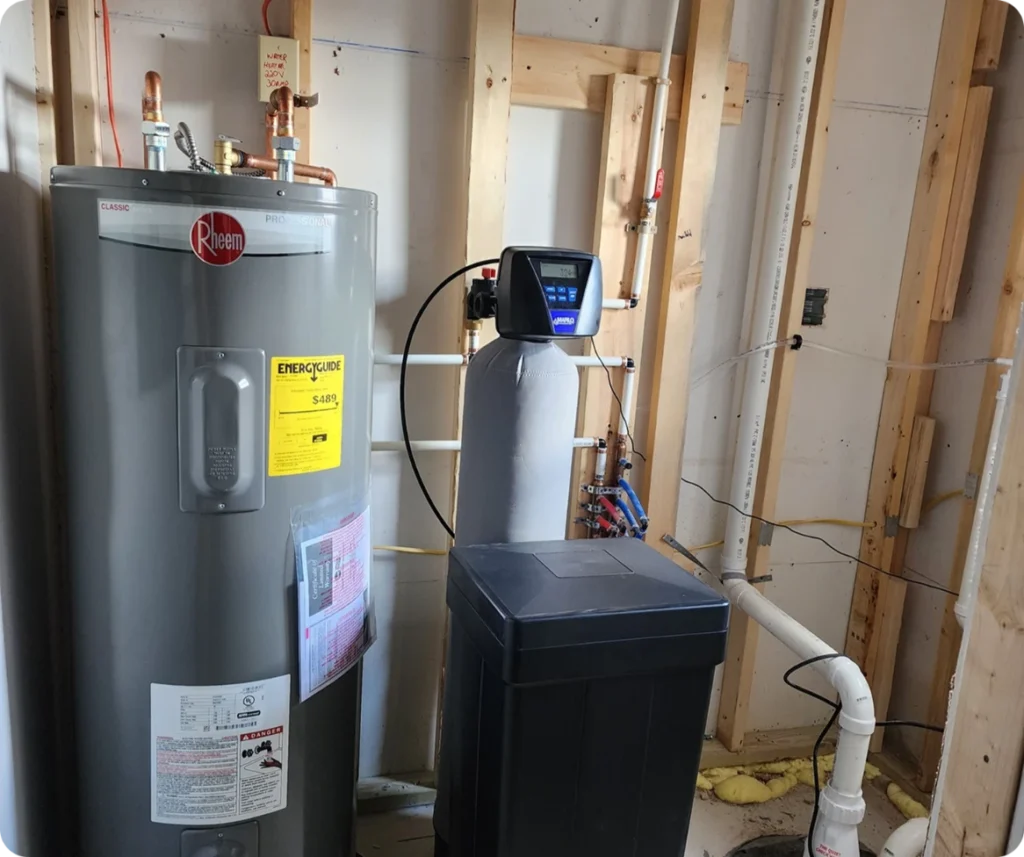
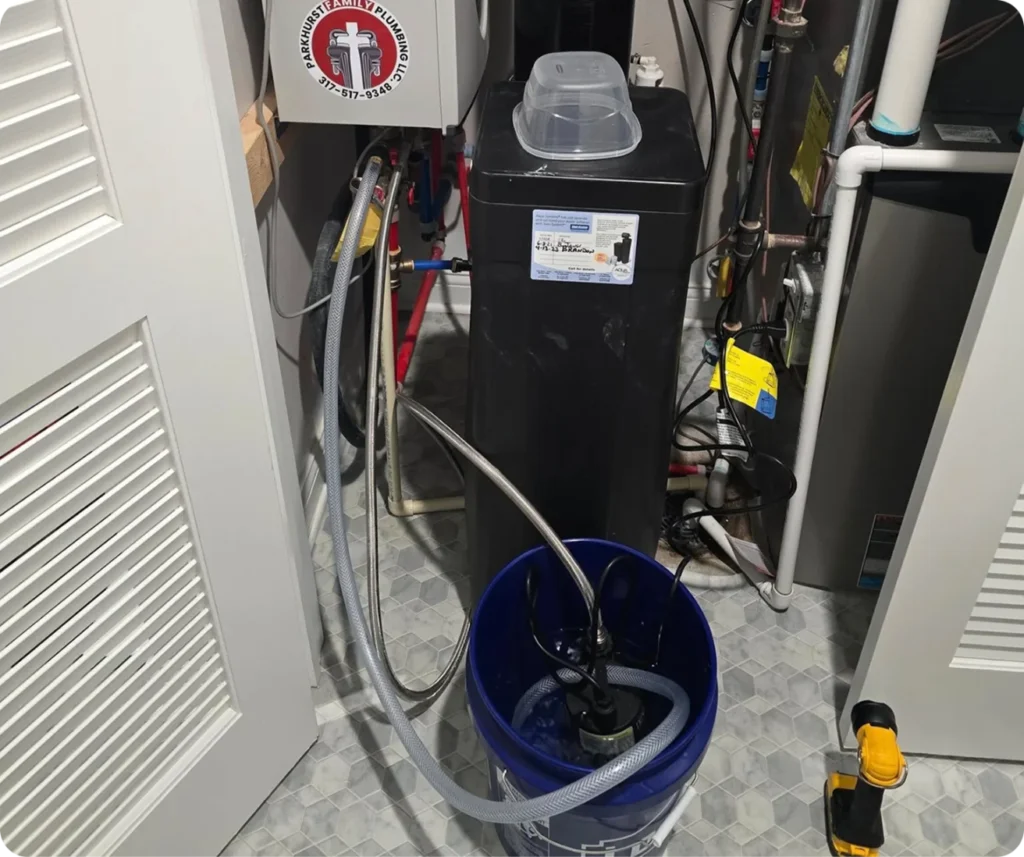
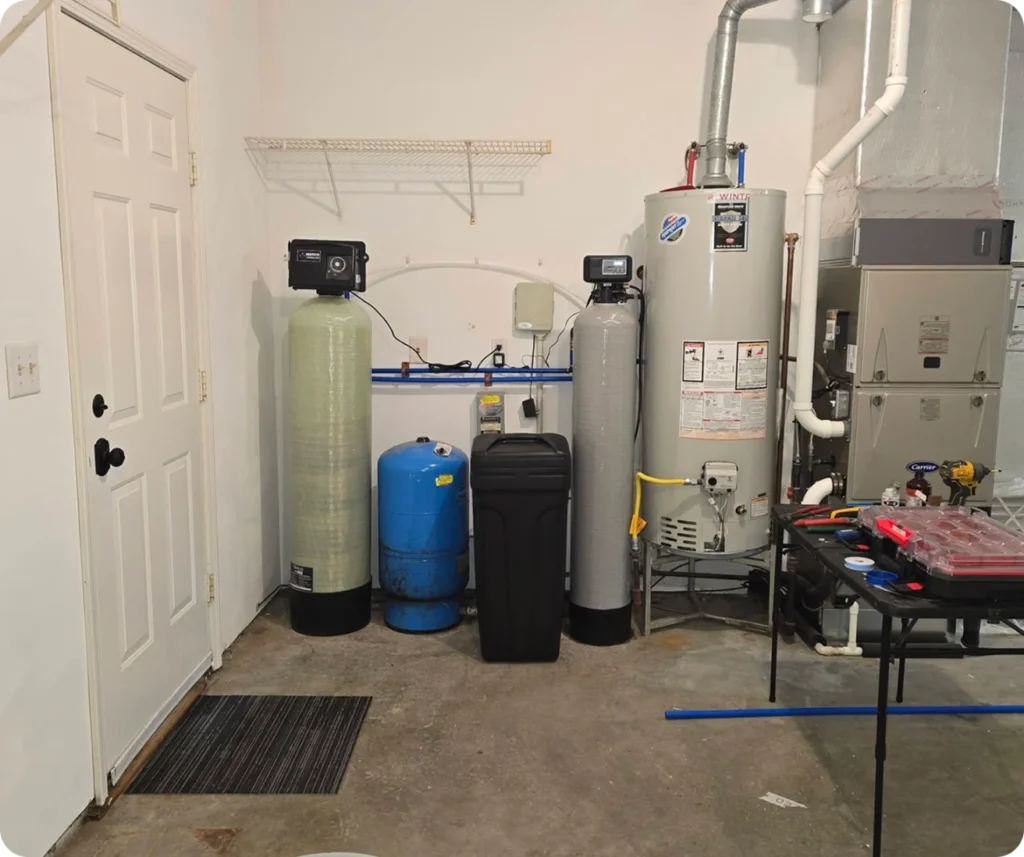
We install the system at your main water line entry point so every faucet and appliance receives filtered water. Installation includes mounting, plumbing connections, a bypass valve, and system testing. We verify the flow rate and filter performance before we leave.

After Installation

We walk you through filter replacement schedules, how to read the system indicators, and when to call us for maintenance. Most carbon filters need replacement every 6 to 12 months, depending on usage and water quality. Financing is available through Wisetack with 0% interest for 12 months.

Related Services

Water Softener Installation

Filtration handles chemicals and sediment. A softener handles hardness. Pairing both gives your home complete water treatment from a single point of entry

Reverse Osmosis Drinking Water

Want the highest level of filtration at your kitchen tap? An RO system removes dissolved solids that whole-house filters don't catch.

Plumbing Inspections

Pair a water test with our whole-house plumbing inspection to get a full picture of your home's plumbing and water quality in one visit.

What Our Neighbors Are Saying

INDIANAPOLIS WATER: WHAT'S ACTUALLY IN IT?

Indianapolis tap water runs 12 to 25 grains per gallon — anything above 7 is considered hard, according to Citizens Energy Group. That mineral load is why water heaters, fixtures, and appliances wear out early across the Southside.

Indianapolis tap water

12

25

GPG

That puts most Southside homes in the hard to very hard range.
Source: Citizens Energy Group

Three systems, three different jobs.

Removes calcium and magnesium through ion exchange. Fixes scale, spots, and soap scum at every tap.

Whole-home · ion exchange

1

Carbon and sediment filtration reduces chlorine, Chemical Contaminants, and sediment throughout the home.

Whole-home · carbon + sediment

2

Point-of-use system under the kitchen sink. Purified
water for drinking and cooking down to the
molecular level.

Kitchen · drinking water

3

Proudly Serving Indianapolis and the Southside

From our shop in Franklin Township, we cover the full south side of the city and into both Marion and Johnson Counties, about a thirty-mile radius across Central Indiana.

Not on the list? Call us — if you’re within our service radius, we’ll make it work.

Water Filtration Questions

Is whole-house water filtration worth it in Indianapolis?

For many homeowners, yes. Indianapolis water comes from surface water sources that are treated with chlorine, which produces disinfection byproducts. A whole-house filter reduces chlorine, improves taste, and gives you cleaner water at every tap, not just the kitchen sink.

A softener removes calcium and magnesium (hardness minerals). A filtration system removes chlorine, sediment, chemicals, and contaminants. They solve different problems. Many Indianapolis homes benefit from both a softener for hardness plus a filter for everything else.

Cost depends on the type of filtration, the number of stages, and your home’s plumbing configuration. We provide a written quote after testing your water and assessing your setup. Financing is available through Wisetack to help with the cost.
Most whole-house carbon filters last 6 to 12 months, depending on water usage and quality. Sediment pre-filters may need replacement more frequently. We’ll walk you through the schedule during installation and are available for maintenance visits when filters are due.

Yes. We test your water before recommending any system. Testing identifies what’s actually in your water — hardness, chlorine, dissolved solids, and potential contaminants — so we can recommend the right filtration for your specific situation instead of guessing.

Ready for an Honest Plumber?

We’re here when you need us — with clear options, reasonable pricing, and work we stand behind.

hOW CAN WE HELP?