Whole-House Repiping Services in Indianapolis
When Repairs Aren't Enough,
It's Time to Replace the System
When your water heater stops doing its job, mornings get uncomfortable fast. Whether your tank unit is leaking, your needs service, or you’re ready for a full replacement, we diagnose the problem honestly and walk you through your options. We serve residential and commercial customers across Southside Indianapolis and surrounding communities
Plumbing Services We Handle Every Day
Water
Heaters
Tank and tankless repair, install, and flush service. Navien and Rinnai certified.
Water
Quality
Softeners, whole-house filtration, and reverse osmosis systems for Central Indiana’s hard water.
General Plumbing Repairs
Faucets, toilets, garbage disposals, fixture stops, main shut-offs, and everyday leaks — done right the first time.
Gas
Lines
Licensed gas line repair and installation for stoves, water heaters, dryers, and more.
Remodels
Bathroom & kitchen remodeling plumbing rough-ins, fixture upgrades & light remodels.
Sump
Pumps
Install, repair, and battery backup systems to keep basements and crawlspaces dry.
Commercial Plumbing
Licensed commercial work for small businesses and property managers across Marion and Johnson Counties.
Plumbing Inspections
Water
Heaters
Tank and tankless repair, install, and flush service. Navien and Rinnai certified.
Water
Quality
Softeners, whole-house filtration, and reverse osmosis systems for Central Indiana’s hard water.
General Plumbing Repairs
Faucets, toilets, garbage disposals, fixture stops, main shut-offs, and everyday leaks — done right the first time.
Gas
Lines
Licensed gas line repair and installation for stoves, water heaters, dryers, and more.
Remodels
Bathroom & kitchen remodeling plumbing rough-ins, fixture upgrades & light remodels.
Sump
Pumps
Install, repair, and battery backup systems to keep basements and crawlspaces dry.
Commercial Plumbing
Licensed commercial work for small businesses and property managers across Marion and Johnson Counties.
Plumbing Inspections
hOW CAN WE HELP?
Aging Pipes Are a Common Problem in Indianapolis Homes
A lot of homes on the Southside of Indianapolis were built between the 1950s and 1990s. That means many are running on galvanized steel supply lines that are well past their 40- to 50-year functional lifespan, or polybutylene pipes that were installed in an estimated 10 million U.S. homes between 1975 and 1996 and are now known to fail due to chemical reactions with chlorinated water. If your home has either material, repiping isn’t a matter of if; it’s a matter of when.
Â
We’ve been replacing aging plumbing systems across the Greater Southside Indianapolis area for over three decades. We’ll assess your home’s existing pipe material, explain your options clearly, and give you an upfront price for the full project. We don’t push repiping on homes that don’t need it — but when the signs are there, we’ll tell you straight.
Built on Workmanship, Not Hard Sells
Three Decades of Experience
Tank and tankless repair, install, and flush service. Navien and Rinnai certified.
Repair-First, Always
If a repair will solve the problem, we'll tell you — even when a replacement would pay us more.
Reasonable Upfront Pricing
Clear options for your budget, no pressure, and free second opinions on quoted projects.
100% Satisfaction Guarantee
Every repair and install is backed by a workmanship guarantee that matters when it counts.
Signs Your Home May Need Repiping
Rusty or Brown Water From Your TapsÂ
If your hot and cold water both run brown, orange, or yellow, especially first thing in the morning, the inside of your pipes is corroding. In galvanized steel pipes, the zinc coating eventually wears through, and the underlying steel rusts from the inside out. By the time you see discolored water, the corrosion is well established.Â
- What to do: Call us for a pipe assessment. If the discoloration is widespread across multiple fixtures, repiping is likely the long-term solution.
Pressure Has Dropped Across Multiple FixturesÂ
When corrosion and mineral buildup narrow the inside diameter of your pipes, water flow decreases everywhere, not just at one faucet. If your pressure used to be fine and has gradually gotten worse over the years, the pipes themselves are likely the problem.Â
- What to do: If cleaning aerators and checking the pressure-reducing valve doesn't help, the restriction is inside the pipes, and repiping is the fix.
You Keep Finding Small Leaks in Different SpotsÂ
One pinhole leak is a repair. Two or three in different locations over a short period is a pattern — and it means the pipe material is deteriorating systemically. Patching each leak individually costs more over time than replacing the whole system once.Â
- What to do: If you've had multiple leak repairs in different areas of the house within the past year or two, call us for a repiping assessment.
Exposed Pipes Show Green, White, or Orange BuildupÂ
Check the pipes you can see in your basement, crawl space, utility room, or under sinks. Green patina on copper, white calcium deposits, or orange rust on steel all indicate corrosion. What you see on the exposed pipe is happening inside the pipes you can’t see, too.
- What to do: Take a photo and call us. We'll assess the visible sections and determine whether the condition extends to the rest of the system.
You Know Your Pipes Are Polybutylene or Galvanized SteelÂ
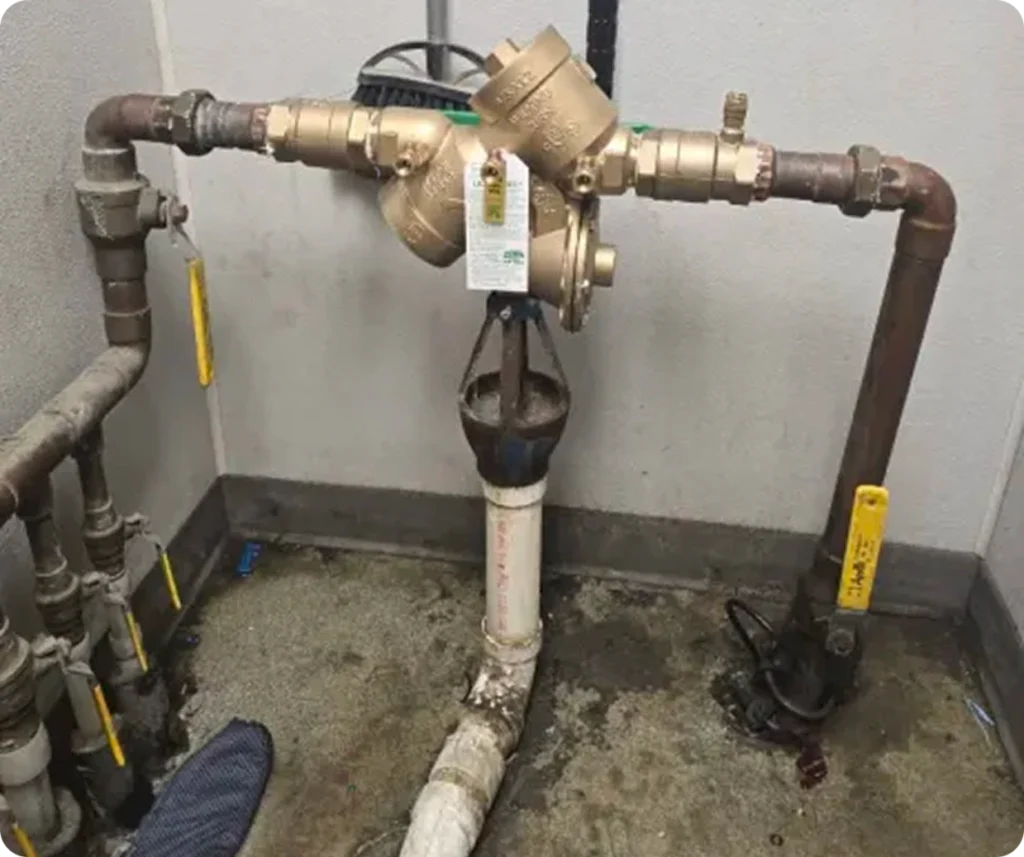
Polybutylene (gray flexible plastic) was installed in millions of homes from the mid-1970s through 1996. It reacts with chlorine in treated water, becomes brittle over time, and can fail without warning. Galvanized steel (threaded gray metal) was standard from the 1920s through the 1960s and has a functional lifespan of 40 to 50 years. If your home has either material, you’re living on borrowed time.Â
- What to do: Call us for a pipe identification and assessment. We'll confirm the material, evaluate the condition, and give you a straight answer on whether it's time to replace.
Repiping Services We Provide
Complete Supply Line Replacement
We replace all hot and cold water supply lines throughout the house, from the main shut-off valve to every fixture. This is the most common repiping project and addresses the root cause of low pressure, discolored water, and recurring leaks.
Targeted Section Replacement
If only a portion of your plumbing has failed — a specific branch, a single floor, or a section of galvanized pipe feeding a bathroom — we can replace just that section. This is appropriate when most of the system is in good condition, and only one area is causing problems.
Drain Line Replacement
Older cast iron and galvanized drain lines can corrode, develop blockages, and eventually crack or separate. We replace deteriorating drain and waste lines with modern materials to restore proper flow and prevent backups.
PEX and Copper Repiping Options
We offer two primary replacement materials: PEX (cross-linked polyethylene) and copper. PEX is flexible, resistant to scale and chlorine, freeze-resistant, and cost-effective. Copper is rigid, proven, and preferred in some applications. We'll explain the pros and cons of each and recommend what makes sense for your home and budget.
What Repiping Does for Your Home
Clean Water Without the Rust
After a repipe, the discolored water, metallic taste, and sediment that come with corroded pipes are gone. New pipe material means clean, clear water flowing to every fixture in your home from day one.
Pressure That Works the Way It Should
New pipes mean full-diameter flow to every fixture. Showers feel stronger, faucets run at full volume, and multiple fixtures can operate at the same time without dropping pressure. It's one of the most noticeable improvements homeowners report after repiping.
Stop Worrying About the Next Leak
Aging galvanized and polybutylene pipes don't give much warning before a full failure. Repiping removes that risk entirely. Instead of reacting to the next leak, you're ahead of the problem with a system that's built for decades of reliable service.
A Real Investment in Your Property
Home inspectors flag galvanized and polybutylene pipes. Some insurance companies charge higher premiums for homes with known problem materials. A full repipe removes those flags, gives buyers confidence, and protects your home's long-term value. If you're thinking about selling within the next five to ten years, a repipe now pays off at closing.
What to Expect During a Repipe
A whole-house repipe is a significant project, and we treat it that way. Here’s how the process works from start to finish.
Step 1 — Assessment and Quote:
We walk your home, identify the existing pipe material, check accessible sections for condition, and map out the scope of work. You'll receive a written quote that covers the full project — materials, labor, drywall access, and cleanup. No surprises midway through.

Step 2 — The Repipe:
We cut small access points in walls and ceilings to reach existing pipe runs, remove the old pipes, and install new PEX or copper supply lines to every fixture. Most whole-house repipes take 2 to 4 days, depending on the size of the home, the number of fixtures, and accessibility. We keep your water running as much as possible during the project and shut it down only when necessary for connections.
Step 3 — Testing and Finish:
After installation, we pressure test the entire system to confirm there are no leaks. We verify flow and pressure at every fixture. We patch the access points we opened in your walls (or coordinate with your drywall contractor if you prefer). We leave the house clean and the system ready to use.
Pricing and Financing:
Repiping cost depends on the size of your home, the number of fixtures, accessibility, and pipe material selected. We provide a detailed written quote. Financing is available through Wisetack with 0% interest for 12 months. This is exactly the kind of project it was designed for.
Related Services
Emergency Plumbing and Leak Detection
If a pipe failure is what brought you here, our emergency service handles the immediate crisis. Repiping is the long-term solution that prevents the next one.
Bathroom and Kitchen Remodeling
If you're planning a remodel, repiping during the renovation gives us access to pipes without additional demolition — the most cost-effective time to upgrade.
Plumbing Inspections
Not sure about the condition of your pipes? Our whole-house inspection includes an assessment of visible pipe material and condition throughout the home.
If you want to work with an honest plumber who will execute the job with excellence, then you need to come to Parkhurst Family Plumbing! We had a major water leak and they got us in contact with a company that would help us with the insurance process while working quickly to help resolve the plumbing issues. We have had him install our kitchen sink four years ago, install a dish washer, install some toilets, replace the outside water spigot after it was leaking, reinstall the garbage disposal, fix the burst pipe (which required getting in the slab) and also fix a bad installation of a pipe in our bathroom by the home builders 20 years ago. He does an outstanding job and will be honest through the process. He’s also come out after hours and all times of the day and NOT charged an arm and a leg. Thanks, Larry! I should have left a review a long time ago — he can do it all!
February 9, 2026
I contacted Larry around 11am because the installers for our new stove said we needed to have a licensed plumber come out and change our stoves gas line. Larry came out later the same day and had everything fixed and even helped install our new stove for us. I highly recommend reaching out to him if you find yourself in need with your plumbing because he really saved my sanity by being here so fast and helping us.
October 15, 2025
Save thousands and use Parkhurst. The big dogs in town will rob you blind!! Apples to Apples quote proves that. One of the few honest business left in Indianapolis. I will 100% use them in the future.
February 25, 2026
We had a new experience in our home last night. We used the master tub, only to come downstairs and find an absurd amount of water coming from around the air vent in the kitchen ceiling! I immediately called Larry, and he was able to come over bright and early this morning to check the problem. Larry quickly found the issue: come to find out, we had a crack in the overflow catch! Larry was able to get it fixed and did a great patch in the wall, too! We’ve never had a plumbing issue before this, but if we ever do again, we definitely know who to call!
January 4, 2026
INDIANAPOLIS WATER: WHAT'S ACTUALLY IN IT?
Indianapolis tap water runs 12 to 25 grains per gallon — anything above 7 is considered hard, according to Citizens Energy Group. That mineral load is why water heaters, fixtures, and appliances wear out early across the Southside.
12
25
GPG
Three systems, three different jobs.
Removes calcium and magnesium through ion exchange. Fixes scale, spots, and soap scum at every tap.
Whole-home · ion exchange
Carbon and sediment filtration reduces chlorine, Chemical Contaminants, and sediment throughout the home.
Whole-home · carbon + sediment
Point-of-use system under the kitchen sink. Purified
water for drinking and cooking down to the
molecular level.
Kitchen · drinking water
Water softener
Removes calcium and magnesium through ion exchange. Fixes scale, spots, and soap scum at every tap.
Whole-home · ion exchange
Whole-house filter
Carbon and sediment filtration reduces chlorine, Chemical Contaminants, and sediment throughout the home.
Whole-home · carbon + sediment
Reverse osmosis
Point-of-use system under the kitchen sink. Purified
water for drinking and cooking down to the
molecular level.
Kitchen · drinking water
Proudly Serving Indianapolis and the Southside
From our shop in Franklin Township, we cover the full south side of the city and into both Marion and Johnson Counties, about a thirty-mile radius across Central Indiana.
Cities We Serve
Not on the list? Call us — if you’re within our service radius, we’ll make it work.
Repiping Questions
How much does whole-house repiping cost in Indianapolis?
How long does repiping take?
Most whole-house repipes take 2 to 4 days. The timeline depends on the size of your home, how many fixtures are being served, and how accessible the existing pipe runs are. We keep disruptions to a minimum and restore water service as quickly as possible each day.
Is repiping worth it?
If you’re spending money on repeated leak repairs, dealing with low pressure, or living with discolored water — yes. A repipe solves all of those problems permanently instead of patching them one at a time. It also removes home inspection flags and may lower your insurance premiums if you currently have polybutylene or galvanized pipes.
Should I choose PEX or copper?
Both are quality options. PEX is more flexible, freeze-resistant, quieter, and typically less expensive to install. Copper is rigid, proven over decades, and preferred in some configurations. We’ll explain the trade-offs for your specific home and recommend what makes the most sense for your situation and budget.
How do I know what kind of pipes I have?
Check the exposed pipes in your basement, crawl space, or utility room. Galvanized steel is a dull gray metal with threaded fittings. Polybutylene is a flexible gray plastic. Copper is reddish-brown. PEX is a flexible plastic in red (hot), blue (cold), or white. If you’re not sure, call us, and we’ll identify it during a visit.
Ready for an Honest Plumber?
We’re here when you need us — with clear options, reasonable pricing, and work we stand behind.